The UPA Government is trying to push through the second wave of airport privatisation before the elections and the controversial elements of this process threaten to harm the sector.


By hosting the 10 ASEAN leaders on Republic Day, India amply demonstrated that ASEAN is a central pillar of its Act East policy. But is India 'central' for ASEAN, asks Dr Rahul Mishra.

Former external affairs minister, K Natwar Singh, shares his critique of the Narendra Modi government's foreign policy in this e-mailed interview with Aditi Phadnis. Edited excerpts

Eyeing greater cooperation with South East Asian countries on economic and security issues, India on Thursday announced a separate Mission for ASEAN region to be set up in Jakarta with a full-time resident Ambassador.

Asked for China's comments on India not joining the RCEP deal over concern of cheap Chinese products potentially harming its domestic industry, Chinese foreign ministry spokesman Geng Shuang told the media in Beijing on Tuesday that China welcomes India joining the deal.

It is often said that the India-Indonesia relationship is overshadowed by mutual neglect.
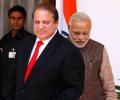
The government has returned to talks with Pakistan, but can it withstand pressure from a jingoistic press and a rabidly nationalistic social media.

India is no longer shying away from playing a role on the regional and international stages and is willing to don a bigger role in regional politics. It is showing traits of a responsible stakeholder in the regional security dynamics, says Dr Rahul Mishra.

Access to Sabang Port will allow the Indian Navy to dominate Malacca Strait more effectively, reports Ajai Shukla.

The five-nation grouping BRICS on Tuesday resolved to combat terrorism in all its forms and manifestations, including the cross-border movement of terrorists, and vowed to step up joint efforts in building support for an India-backed global framework to effectively deal with the menace.

Modi said India will continue its support to ASEAN for a rules-based security architecture for the region.

'Pakistan's negativism should be seen as the reason for India losing interest in SAARC.'
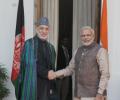
Security will be a consideration, as would protocol, but given Modi's penchant for the unconventional, it should not come as a surprise if he indeed decides to attend the ceremony in Kabul, says Ramesh Ramachandran.

'While military acts such as the Uri surgical strikes are one option, cultural, economic and diplomatic isolation should also be part of the arsenal,' argues Sankrant Sanu.

'The entire Ufa fiasco was predictable and predicted. The Ufa venue had created international interest in the initiative and its failure may have implications for both Pakistan and India. What remains for Modi to do is to produce a prettier rabbit out of his hat next time to deal with the Pakistan imbroglio,' says Ambassador T P Sreenivasan.
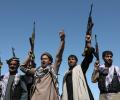
'But an overthrow of the Afghan government would really embolden regional militant groups in a big way.' 'LeT and JeM could be emboldened, and prompted to replicate in Kashmir what the Taliban did in Afghanistan.'

Considering Modi's style of practicing diplomacy, it is likely that a clear message would be conveyed to China that it is high time Beijing stops using its good relations with Pakistan as a pressure tactic against India. This is imperative not only for strengthening India-China relations at the bilateral level but also for maintaining stability at the regional level, says Sana Hashmi.
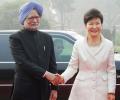
South Korean President Park Geun-hye's visit to India will enhance economic and military ties between the two countries and give the relationship a strategic dimension, says Jiye Kim.

Lending support for India's ambitious Nalanda University project, six countries on Thursday began the process of signing inter-government agreements to pledge their commitment for this academic institution.
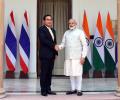
Thailand's importance to India's Act East policy is too significant to be overlooked.

India's curve, yet to flatten vis-a-vis countries with similar or more conservative plans to ease restrictions, still points to 'exponential growth', despite India having tested much fewer people.
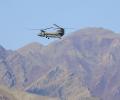
'Our strategy should be to 'hold the line' in the north on the Sino-Indian land frontier, but maintain and, if possible, enlarge India's current edge in the maritime south.'

The 2 countries signed 15 agreements including one on defence cooperation after Prime Minister Narendra Modi held 'productive discussions' with President Joko Widodo.

Modi will have a number of high-profile multilateral and bilateral meetings with global leaders including United States Vice President Mike Pence and Singapore premier Lee Hsein Loong.

'During his visit to Vietnam on September 3 -- the first visit by an Indian prime minister in 15 years -- Modi will notice the widespread anti-China sentiment in that country.'
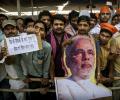
'Modi's victory is his own victory. Now what he has done thereafter, it seems to me, leads us to believe that he was a bit too prolific with his promises.' 'One achievement of Modi's I will praise is that he has put the fear of God among his ministers and officials.' 'Indira Gandhi's sentiment of controlling everything, centralising power in to her hands is the quality that persists in Modi' Veteran journalist Inder Malhotra casts his experienced gaze on one year of the Modi Sarkar.
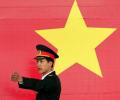
Modi's Vietnam visit is timely and crucial for several reasons. First, Vietnam lies at the heart of India's vision for Southeast Asia as also its 'Act East' policy. India also wants to boost its defence exports to friendly countries. And it is looking to increase trade between the two countries will now is only $7.83 billion, says Dr Rahul Mishra.

The Summit comes at a time when China is flexing its muscle to tighten its grip over the disputed South China Sea.

India should enhance its economic, cultural and defence ties with Mongolia. It is high time Modi should focus on gaining clout in smaller Asian countries such as Mongolia. It is in this context, India's engagement with Mongolia would give much-needed impetus to India's foreign policy, says Sana Hashmi.
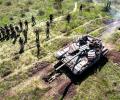
'As long as we have such partners, Russia cannot be isolated.'

This is Modi's first bilateral visit to Myanmar.

'Well begun is half done, today there are more hits than misses by the Modi government in its support towards science in India,' says Pallava Bagla.
'It seems a wiser decision to pull out at the right moment than regret after joining the pact,' explains Dr Rahul Mishra.
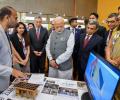
He said that India will work with Singapore to bring the Regional Comprehensive Economic Partnership to early conclusion. He also said the India-Singapore Comprehensive Economic Cooperation Agreement has been reviewed and the two sides will work to further upgrade it.
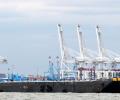
Tehran plans to lift exports by 500,000 barrels per day

'The Modi government's pusillanimity vis-a-vis Pakistan makes almost certain that India will, in the coming weeks and months, be confronted with cross border terrorist actions of increasing intensity,' warns Satish Chandra, former deputy national security adviser.

'Problems will keep recurring unless China vows to resolve all outstanding issues between the two sides,' says Sana Hashmi.

'We have a common way of looking at the world, a common way of thinking, and a common set of values that predispose us to be partners. And our interests overlap greatly,' Dr Ashton B Carter, America's next defence secretary, told Aziz Haniffa/Rediff.com in an exclusive interview.

'Building on the potential for closer ties is the changing narrative in each country about the other. The Chinese narrative on India has become significantly more positive over the past few years,' says Walter Andersen and Zhong Zhenming.
